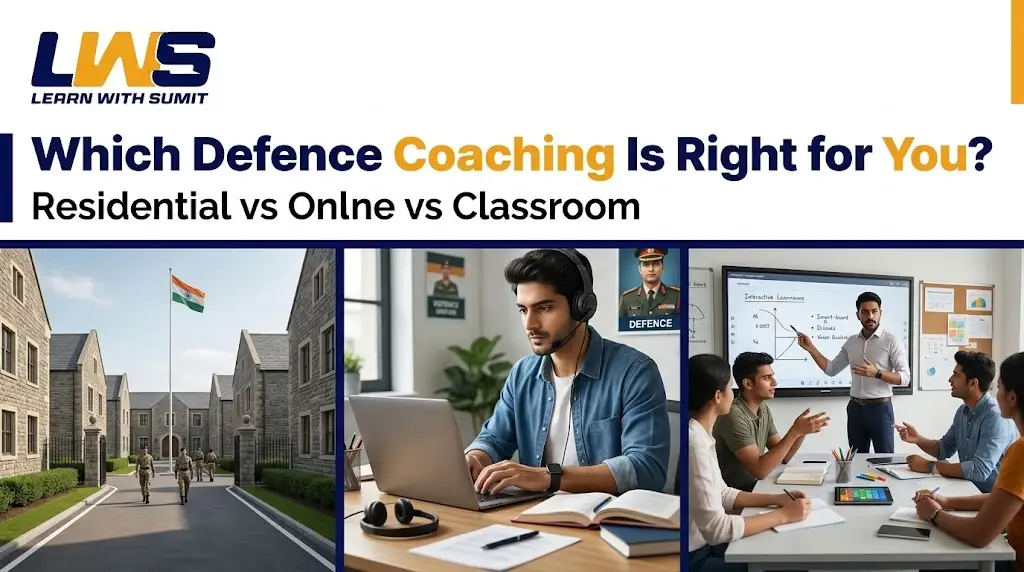
Best Defence Coaching in India: Residential vs Online vs Classroom Coaching
Explore Defence Preparation with LWS
Before choosing a coaching format, identify your target examination, preparation level and areas that need improvement. Explore the current learning options available through LWS (LWS) and check which offerings match your preparation goals. Explore LWS Courses1. Why Does Your Choice of Defence Coaching Matter?
Defence examinations require more than memorising facts. Depending on your target entry, preparation may involve written examinations, time-bound practice, current affairs, physical fitness and preparation for the Services Selection Board (SSB) or Air Force Selection Board (AFSB). The right coaching format should help you manage these different requirements without making your schedule unnecessarily difficult. It should also allow you to identify weaknesses, revise regularly and measure your progress. When comparing the best defence coaching in India, consider the following factors:- Quality and clarity of teaching.
- Availability of doubt-solving support.
- Regular mock tests and performance analysis.
- Study materials and revision resources.
- Time available for self-study and practice.
- Physical training facilities, where required.
- Access to guidance for SSB or AFSB preparation.
- Fees, accommodation costs and travel requirements.
2. What Is Residential Defence Coaching?
Residential defence coaching combines academic preparation with accommodation and a structured daily routine. Depending on the institute, students may follow scheduled classes, supervised study sessions, physical training, meals and revision activities within the same campus or residential facility. This format may suit aspirants who need a more organised environment or who find it difficult to maintain a consistent study routine at home. Advantages of residential coaching:- Structured routine: Fixed schedules can help students build consistency in studying, revising and exercising.
- Fewer daily distractions: A dedicated learning environment may reduce interruptions associated with commuting or household responsibilities.
- Peer learning: Studying alongside other aspirants can encourage healthy competition, discussion and shared practice.
- Integrated preparation: Some institutes provide academic classes, supervised study and physical training in one programme.
- Regular supervision: Depending on the institute, mentors or instructors may monitor attendance, assignments and progress.
- Residential programmes may involve higher overall expenses because of accommodation, meals and other charges.
- Students have less flexibility to manage their own daily schedules.
- The quality of facilities, teaching and supervision varies from one institute to another.
- Living away from family may require an adjustment period, particularly for younger students.
3. What Is Classroom Defence Coaching?
Classroom coaching allows students to attend scheduled classes at a coaching institute while continuing to live at home or in separate accommodation. It offers face-to-face teaching without necessarily requiring students to stay on campus. This format can be a practical choice for aspirants who benefit from direct interaction with teachers but want to retain greater independence outside class hours. Advantages of classroom coaching:- Direct interaction: Students can ask questions during class and discuss difficult concepts with instructors.
- Peer discussions: Classroom activities can encourage group learning and healthy competition.
- Scheduled learning: Fixed class timings provide structure and help students plan their study hours.
- Access to local facilities: Students may be able to attend in-person tests, workshops or other sessions offered by the institute.
- Independent living: Students can continue living with their families if the institute is accessible from home.
- Daily commuting can consume time and energy.
- Students may need separate arrangements for physical training and fitness practice.
- Class timings may not suit everyone, especially those managing school, college or employment.
- Progress depends partly on how effectively students use their time outside the classroom.
4. What Is Online Defence Coaching?
Online defence coaching provides learning through digital platforms. Depending on the programme, students may access live classes, recorded lectures, downloadable notes, online mock tests and doubt-solving sessions. It can be especially useful for aspirants who live far from coaching centres, have limited travel options or need to balance preparation with school, college or work. Advantages of online coaching:- Location flexibility: Students can study from home or another suitable location with a reliable internet connection.
- Reduced commuting: Time saved on travel can be used for revision, practice and rest.
- Flexible revision: Recorded lessons, when available, allow students to revisit difficult topics.
- Convenient scheduling: Some programmes offer flexible access to lessons and learning materials.
- Potential cost savings: Online learning may reduce travel and accommodation expenses, although course fees and other costs vary.
- Students need self-discipline to follow a consistent study plan.
- Internet connectivity and suitable devices are important for uninterrupted learning.
- Personal interaction may be limited unless the programme offers live doubt-solving or mentoring.
- Physical fitness training and practical group activities generally require separate arrangements.
- Not every online course provides the same quality of feedback, testing or support.
5. Residential vs Classroom vs Online Coaching: Comparison
The following comparison can help you shortlist the format that best matches your circumstances. Actual facilities and services depend on the individual institute or programme.- Learning environment: Residential coaching offers a dedicated living and learning environment; classroom coaching provides face-to-face instruction; online coaching allows learning from a location of your choice.
- Daily routine: Residential programmes often have a fixed schedule; classroom students organise the rest of their day; online students usually need to manage their own routine.
- Teacher interaction: Residential and classroom formats may provide direct interaction; online programmes can offer live interaction and doubt-solving if included.
- Flexibility: Online learning generally offers the most location flexibility. Classroom and residential programmes usually have more fixed schedules.
- Physical fitness: Some residential institutes provide on-site training. Classroom and online aspirants may need to arrange their own fitness routine unless additional facilities are included.
- Overall cost: Residential coaching may include accommodation and meals in addition to tuition. Classroom students may pay travel costs, while online students may need a device and internet access.
- Self-discipline: All formats require consistency, but online and classroom students may need to organise more of their independent study time themselves.
- Best suited for: Residential coaching may suit students who want an immersive routine; classroom coaching may suit those who prefer direct teaching; online coaching may suit those who need greater flexibility.
LWS Tip: Compare the Support, Not Just the Format
Before enrolling, check what the programme actually includes. Look for details about live or recorded classes, doubt-solving, mock tests, feedback, study materials and any SSB or AFSB preparation. Do not assume that every course provides all these facilities.6. Which Coaching Format Is Best for NDA Aspirants?
The National Defence Academy (NDA) examination requires preparation for Mathematics and the General Ability Test (GAT), subject to the latest official examination pattern. Candidates should also understand the subsequent selection stages and eligibility requirements. The best learning format depends on your academic foundation, current class or education level, daily schedule and need for supervision.- Choose residential coaching if: You need a structured routine, prefer studying with other aspirants and have access to a suitable residential programme.
- Choose classroom coaching if: You benefit from in-person teaching and can balance classes with independent study.
- Choose online coaching if: You can follow a study timetable independently and need flexibility around school or other commitments.
7. Which Coaching Format Is Best for CDS and AFCAT?
Graduates preparing for the Combined Defence Services (CDS) examination or the Air Force Common Admission Test (AFCAT) may have different requirements from school-level NDA aspirants. Many candidates need to balance preparation with college, employment or other responsibilities.- Residential coaching: Consider it if you can commit to an intensive schedule and prefer a structured learning environment.
- Classroom coaching: Consider it if you want direct instruction and can attend classes without disrupting other responsibilities.
- Online coaching: Consider it if you need to study around work, college or family commitments.
8. What Should You Look for in SSB or AFSB Preparation?
Written examination preparation and selection-board preparation involve different types of practice. Depending on the entry, candidates may need to prepare for psychological tests, group tasks, personal interviews and other assessment activities. When comparing coaching options for SSB or AFSB preparation, consider the following:- Opportunities to practise relevant assessment activities.
- Clear explanations of the selection process and expectations.
- Constructive feedback on communication and performance.
- Guidance on self-awareness, teamwork and responsible decision-making.
- Realistic practice sessions, where available.
- Support that encourages genuine personal development rather than memorised answers.
9. How to Choose the Best Defence Coaching in India for Your Needs
Instead of selecting an institute only because it is popular, compare the programme with your personal needs. A format that works well for one aspirant may not be suitable for another.- Define your goal: Decide whether you are preparing for NDA, CDS, AFCAT, SSB or another defence entry.
- Assess your current level: Identify your strengths, weak subjects and available preparation time.
- Set a realistic budget: Include tuition, accommodation, meals, travel, devices and other necessary expenses.
- Check faculty and teaching methods: Look for clear explanations, relevant experience and a teaching approach that suits you.
- Review practice facilities: Ask about mock tests, feedback, revision plans and doubt-solving arrangements.
- Check the schedule: Make sure you can maintain a sustainable routine without neglecting sleep, health or other responsibilities.
- Verify claims: Ask for transparent information about fees, facilities, batch size, course inclusions and results.
- Confirm the latest details: Check the official examination notification for current eligibility, syllabus and selection requirements.
10. Common Mistakes to Avoid When Selecting Defence Coaching
Even a well-known institute may not be the right choice if its teaching format or support system does not match your needs. Avoid these common mistakes:- Choosing coaching only because of advertisements or popularity.
- Assuming that residential coaching automatically guarantees better results.
- Enrolling in online classes without planning time for self-study.
- Ignoring commuting time when comparing classroom programmes.
- Paying for facilities you do not need or are unlikely to use.
- Overlooking mock tests, revision and doubt-solving support.
- Believing promises of guaranteed selection or success.
- Ignoring physical fitness and later-stage preparation where relevant to your target entry.
Important Preparation Reminder
Coaching can provide structure, resources and guidance, but selection depends on several factors, including eligibility, preparation, performance and the official selection process. Choose a programme based on its actual value and your own needs rather than promises of guaranteed results.