7-Step Military Problem-Solving Process: Building Leaders at LWS
7-Step Military Problem-Solving Process: How LWS Builds Future Defence Leaders
In the defence sector, success depends on structured thinking, quick decision-making, and calm execution under pressure. At LWS, aspirants are trained not just for exams like NDA, CDS, and AFCAT but to develop an officer-like mindset using the military problem-solving framework.
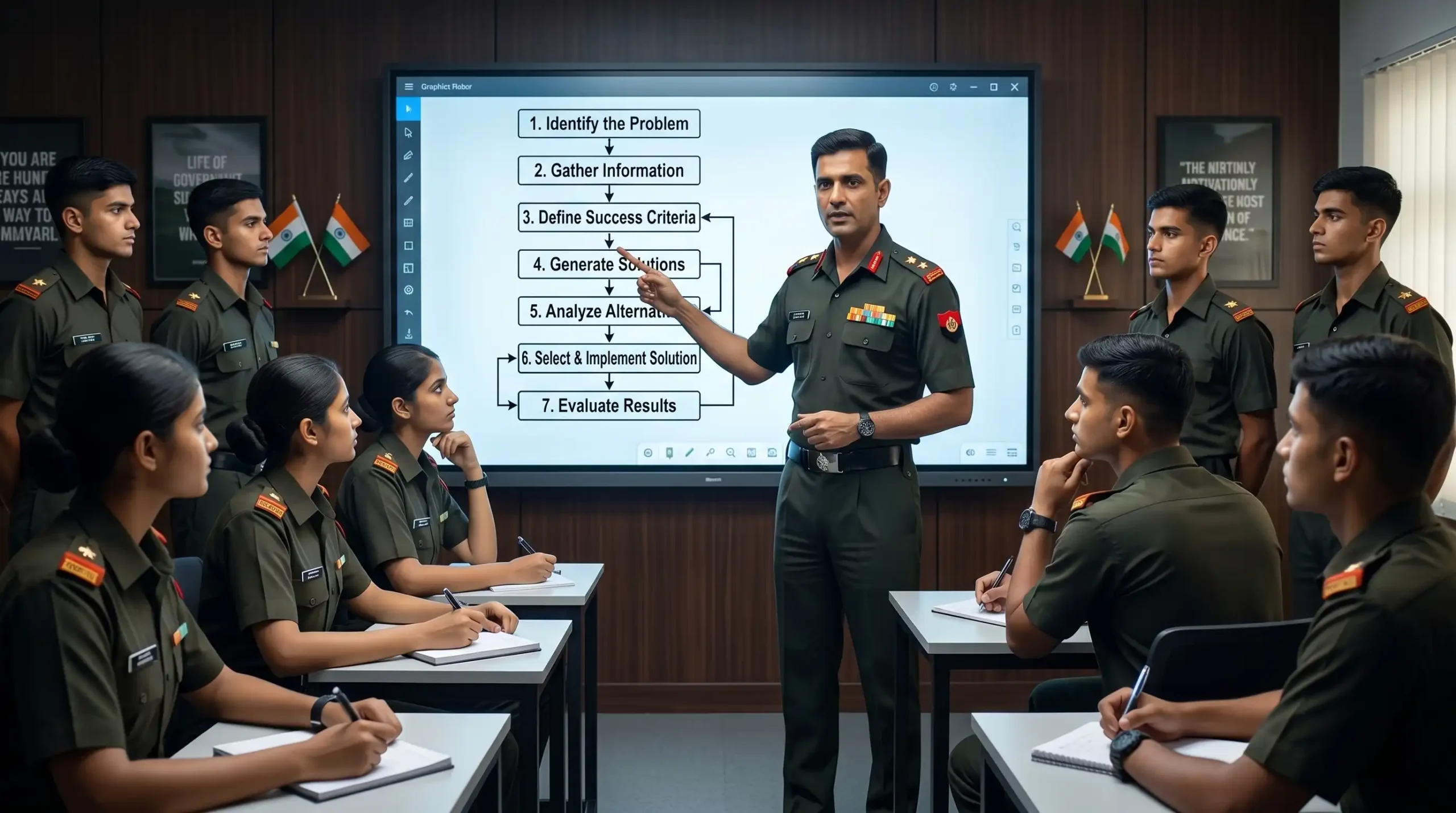
The 7-Step Military Problem-Solving Process is a core leadership tool that helps cadets handle real-life operational and SSB-level challenges effectively.
1. Identify the Problem
The first step is to clearly understand what the actual problem is. In defence thinking, vague assumptions are avoided. The problem must be defined precisely, not emotionally.
At LWS, students are trained through SSB-like scenarios to identify the exact issue instead of guessing or overthinking.
2. Gather Relevant Information
Before solving anything, correct information must be collected. This includes facts, ground reality, and available resources.
LWS trains aspirants to work under incomplete data conditions—just like real defence situations where decisions must still be made confidently.
3. Develop Criteria for Success
Here, success is defined. What should the final solution achieve? What are the limitations?
At LWS, candidates are taught to think like officers—where every decision must have measurable outcomes and clear objectives.
4. Generate Multiple Solutions
Instead of relying on a single idea, multiple solutions are created to handle the situation.
This stage is strongly practiced in GTO tasks, group discussions, and leadership exercises at LWS, encouraging creative and logical thinking.
5. Analyze and Compare Alternatives
Every solution is evaluated based on feasibility, practicality, and effectiveness.
LWS focuses on removing emotional bias and building strong analytical thinking aligned with defence selection standards.
6. Select and Implement the Best Solution
After analysis, the best solution is selected and executed with confidence and responsibility.
At LWS, cadets are trained to take action quickly, just like officers in real-time operational scenarios.
7. Evaluate the Results
The final step is reflection—what worked, what failed, and what can be improved.
LWS follows structured After Action Review (AAR) sessions where every task is analyzed for continuous improvement.
Why LWS Focuses on This Model
- Develops Officer Like Qualities (OLQs)
- Enhances SSB Interview Performance
- Builds Decision-Making Under Pressure
- Improves Leadership & Teamwork Skills
Conclusion: Think Like an Officer, Train Like a Leader at LWS
The 7-step military problem-solving process is not just a theory—it is a leadership transformation system. At LWS , this framework is deeply integrated into NDA, CDS, AFCAT, and SSB training.
If you want to build a defence career with the right mindset, discipline, and decision-making ability, LWS is where your journey begins.